
Hello, friends!
Writing, as we know, can be a challenge. Possibly the biggest writing plague that may or may not exist depending on who you ask is, of course, Writer’s Block™. Oftentimes, to combat Writer’s Block™, we writers seek inspiration. As defined by dictionary.com, inspiration is “an inspiring or animating action or influence”. Inspiration comes in whatever form you find to be encouraging and enlightening.
If you’re struggling with losing interest in your story or you just don’t know what to do with it or you don’t even have a story yet, here are some ways to seek and use inspiration.
Pictures.
Possibly the most obvious and accessible, seeing a picture can immediately spark thoughts and questions. When looking at a picture and waiting for it to speak to you, ask the essentials. What could happen here? To whom is it happening or who’s doing it? What do the colors say about the mood? What do the little details say about the secrets or history of the place or person? Remember: you have absolute freedom over how you interpret this picture. Anything you can come up with can happen. Embrace the feeling of limitless creation.
Prompts.
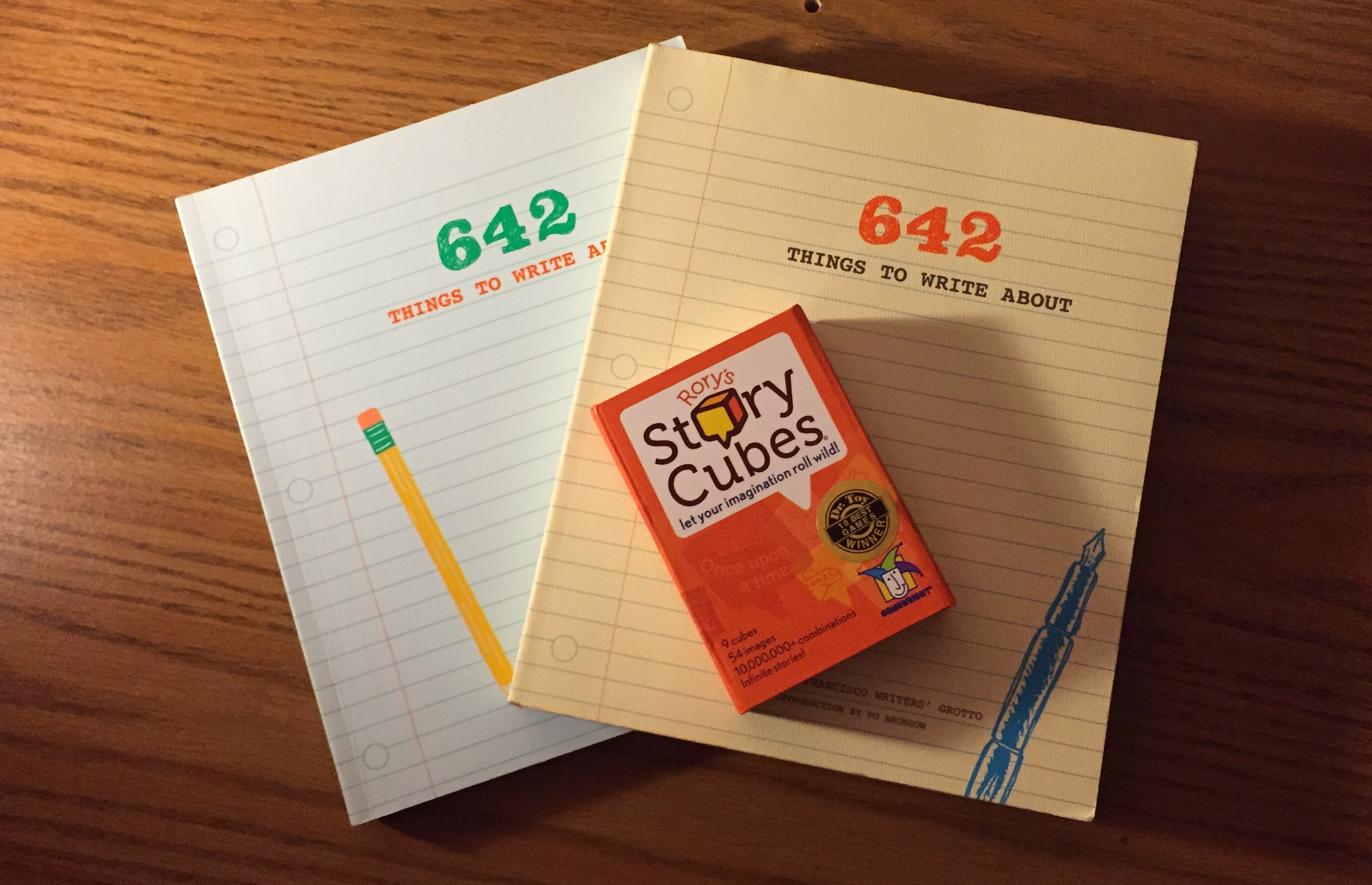
To specify, written prompts. There’s a million online, on various accounts and websites. All it takes is a quick “writing prompt” Google search, and you’ll encounter countless suggestions. From dialogue, character or setting descriptions, themes, there is nothing you can’t find. If you’re looking for something off the wall or specific, look into getting a prompt book. The ones I have are filled with strange and unique setups that have been very exciting to work with. Pay attention to diction and dialect to give you a better idea of the speaker of the prompt.
The great thing about writing prompts is they offer even more freedom than picture prompts. There are no visual guidelines to adhere to, just the words in the prompt, open to your interpretation.
Music.
Listening to music can be a big help. Find songs in the mood or style of your books and characters. Certain words or phrases in a song can also get you thinking about what you want your character to say. Consider the type of music your characters would listen to and then play it. Try to climb into the minds of your characters, learn their preferences, their reactions, and write them. While writing, instrumentals from your story’s genre can be a big help in keeping you focused on the feel of what you’re writing.
Reading.
When you can’t write, read. It’s an age-old philosophy because it’s true! Whether it’s a blog, a memoir, a journal or a novel, reading is the best way to learn about writing without actually doing it. It’ll open your eyes to ways you can use language and teach you what to do or what not to do. Fiction is an especially good source for studying how to set up and develop characters or a plot. While TV shows and movies can also be helpful in that respect, be careful you don’t get too drawn in. Reading keeps the content in your brain, while watching keeps the content on a screen. Be sure whatever you do, you’re learning and paying attention.
Games.
Whether it’s a board game or a video game, games are an underrated source of inspiration. Board games teach you how rules and relationships affect gameplay and story progression. Video games oftentimes have very compelling storylines and can show you how a character might be inhibited by restrictions or strengthened by skills.
A “board game” I have that’s especially great for story forming is called Story Cubes. Basically, a number of cubes with different faces are rolled. If you’re playing with other people, you try to connect your cubes in a story. If you’re using it by yourself, you can try to rearrange and formulate a story within your set of cubes.
People.
People are a source that’s almost always available. Whether you want to perch at a nearby park and observe (hopefully not too creepily), or just want to include dialogue you overheard from your friends or family, you can come up with plenty of intriguing scenarios for any person or sentence you notice. Use your experiences and surroundings to your advantage!
Freewriting.
Freewriting is a simple tactic that can sometimes prove difficult. If you’re writing a boring or unpleasant scene, step back and just write whatever comes to mind. It can be from a character’s perspective or just thoughts whipping around in your own brain. Sometimes it’s challenging to capture fluid thoughts to write down, but in doing so, you really get that writing spark blazing. Keep the flame hot and keep using it!
In using all of these tactics, be wary of why you’re doing it. If you’re just stuck, these can be a great tool to unstick you! If you’re just procrastinating or putting something off, maybe use fewer distractions and just get whatever it is over with. You’ll thank yourself later!
How do you use inspiration? Are there any other tactics I didn’t mention that you find helpful? Leave a comment and let me know, and feel free to leave any other requests or questions as well. You’re welcome to like or follow for more writing content.
Thanks for reading!
“Don’t waste time waiting for inspiration. Begin, and inspiration will find you.”
― H. Jackson Brown Jr.
 Jayda Louise
Love it! I also like listening to classical music and imagining who the characters would be and what they might be doing if it were a movie score. It really gets the creative juices flowing and can be great for inspiration! 🙂 Anyways, I enjoyed your post!
LikeLike